A swimming pool is far more than a basin of water; it is a complex piece of heavy infrastructure that must withstand immense physical pressure. Without rigorous mathematical oversight, the weight of the water and the shifting of the earth can lead to catastrophic structural failure. Prioritizing pool structural engineering ensures that your backyard oasis remains a permanent fixture rather than a temporary installation.
Building a luxury pool requires a deep understanding of local geology and physics to prevent cracking or shifting over time. If you are ready to begin your project, JAL Pools offers premier pool construction in Salt Lake City and Park City to bring your vision to life. You can learn more about our specialized pool construction services to see how we prioritize safety and precision in every build.
Load Calculations and Soil Analysis
Every successful build begins with a comprehensive assessment of the site and the forces that will act upon the vessel. Engineers must calculate the hydrostatic pressure exerted by the water against the walls while simultaneously accounting for the active pressure from the surrounding soil. This balance is critical because an empty pool can actually lift out of the ground if groundwater levels rise unexpectedly.
- Hydrostatic Pressure: This refers to the force exerted by the water inside the pool which pushes outward against the shell.
- Surcharge Loads: These are additional weights near the pool edge such as heavy stone decking, outdoor kitchens, or retaining walls.
- Soil Bearing Capacity: This measurement determines how much weight the local earth can support without compressing or shifting.
- Expansive Soils: Certain clay-heavy soils in Utah can swell when wet, requiring specific engineering to prevent shell cracking.
Structural Reinforcement Methods
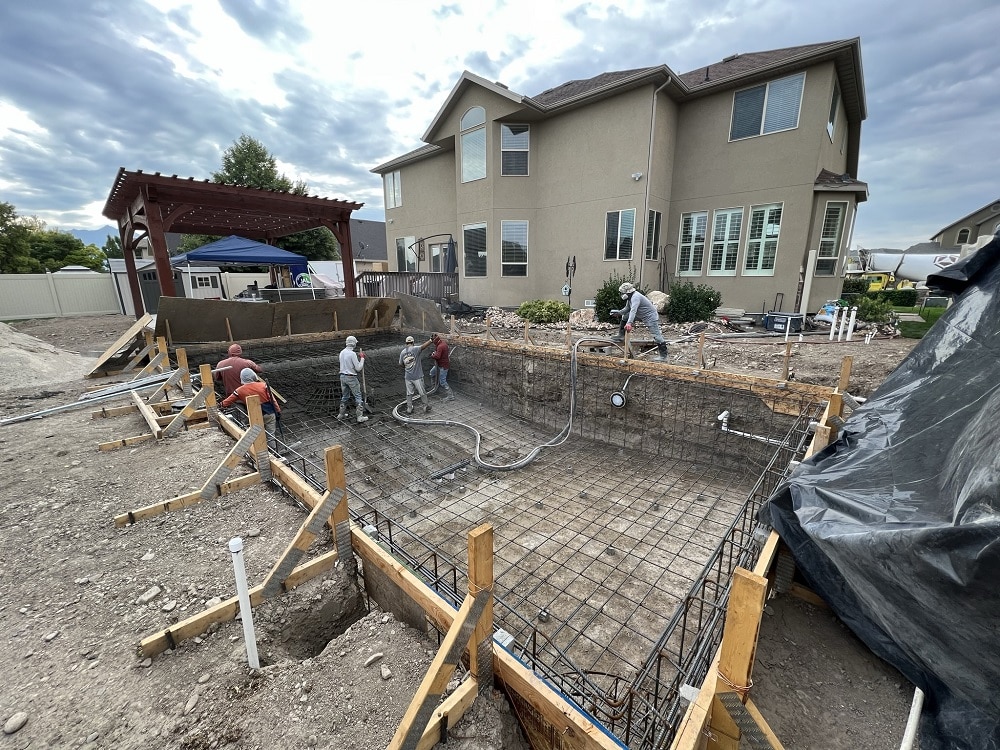
Once the loads are understood, the focus shifts to creating a skeleton that can withstand those specific stresses. Modern pool construction relies on a grid of steel and high-pressure concrete to create a monolithic structure. These reinforcement methods are the primary defense against the natural movement of the earth and the weight of the water.
- Rebar Grid Spacing: Engineers specify the exact distance between steel bars to ensure the shell can handle localized tension.
- Steel Grade and Thickness: High-tensile steel is utilized to provide the necessary flexibility and strength for large-scale vessels.
- Shotcrete Application: This high-velocity concrete application ensures a dense, air-void-free bond around the reinforcement steel.
- Beam Reinforcement: The top edge of the pool is thickened and reinforced to support the weight of coping and foot traffic.
Long-Term Durability and Safety Benefits of Structural Engineering for Pools
Investing in professional pool structural engineering provides peace of mind that spans decades rather than just a few seasons. A well-engineered pool is designed to flex slightly with temperature changes and soil settling without developing structural leaks. This proactive approach significantly reduces the likelihood of expensive emergency repairs or total shell failure.
Beyond the physical structure, engineering ensures the safety of everyone using the facility by preventing sudden collapses or drainage issues. Properly calculated structures maintain their water levels, protecting the surrounding landscape and home foundation from water damage. This technical oversight transforms a standard build into a high-end architectural asset that stands the test of time.
Engineering Requirements for Sloped Properties
Building in mountainous regions like Park City often involves navigating dramatic elevation changes that require specialized expertise. Sloped lots introduce the risk of “downhill creep” and require advanced anchoring systems to keep the pool in place. Engineers must design custom solutions to ensure the pool does not put undue stress on the hillside or vice versa.
- Friction Piles: These are deep pillars driven into the ground to anchor the pool to stable soil or bedrock.
- Grade Beams: Horizontal structural elements are used to distribute the weight of the pool across a wider surface area on slopes.
- Retaining Wall Integration: The pool shell is often designed to work in tandem with walls that hold back the uphill soil.
- Cantilevered Shells: In extreme cases, parts of the pool may be engineered to hang over a slope with heavy internal reinforcement.
How Structural Engineering Protects Pool Investment
When you choose to prioritize pool structural engineering, you are essentially buying insurance for your property value. A pool that develops structural cracks is a liability that can cost nearly as much to fix as it did to originally build. By getting the physics right the first time, you ensure that your investment remains a functional and beautiful part of your home.
High-quality pool construction is the difference between a high-maintenance headache and a seamless luxury experience. JAL Pools is proud to provide the highest standards of engineering and craftsmanship for homeowners in Salt Lake City and Park City. Contact us today to discuss how we can build a world-class pool that is engineered for excellence and built to last.