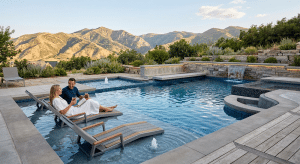
Your property’s landscape plays a direct role in how a swimming pool is planned, engineered, and constructed. The terrain impact on pool design influences everything from structural stability and excavation costs to drainage strategies and final aesthetic appeal. Flat lots allow straightforward installation, while sloped yards demand specialized retaining walls and customized foundations to keep the pool secure.
Homeowners across Salt Lake City and Park City must carefully consider local elevations and soil conditions before breaking ground. Partnering with a skilled professional ensures your outdoor space remains safe and functional for decades. Contact JAL Pools today to explore how our luxury custom pools can be tailored perfectly to your unique mountain or valley landscape.
Major Takeaways
Before starting your outdoor transformation, keep these core terrain factors in mind:
- Sloped lots require specialized engineering, including retaining walls and reinforced footings.
- Soil composition and drainage systems prevent settling, erosion, and structural movement.
- Elevation variations create distinct design options like infinity edges and multi-level decks.
- Strategic pool placement maximizes sunlight, privacy, and seamless indoor-outdoor transitions.
- Working with experienced local pool builders ensures compliance with regional building standards.
How Sloped vs. Flat Terrain Impacts Pool Design
Building on a flat lot presents fewer structural hurdles during excavation and installation. Flat ground allows builders to use standard digging equipment and straightforward pool shells. This keeps site preparation simple, predictable, and cost-effective.
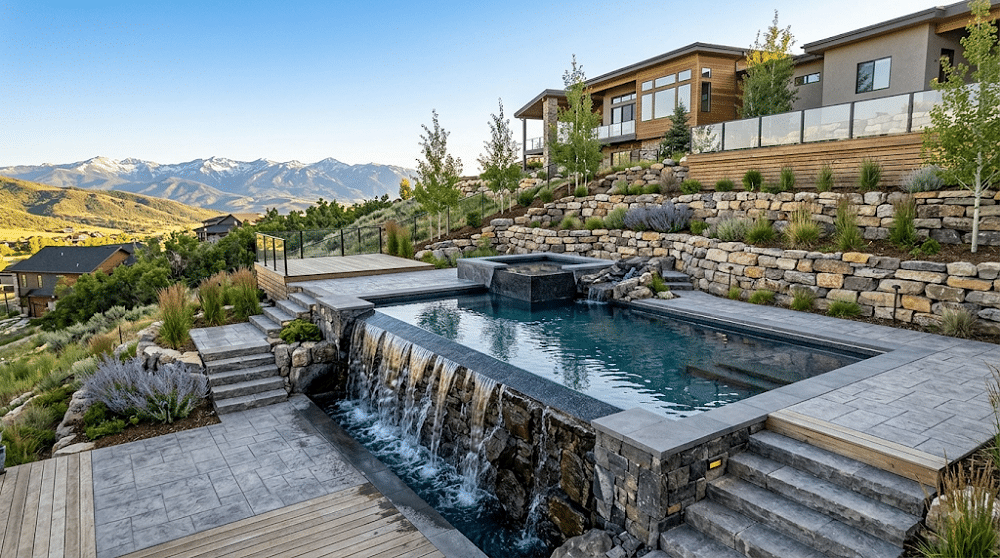
Sloped terrain introduces complex engineering requirements that change the scope of construction. A hillside yard requires extra excavation, earth retention, and structural support. Builders must cut into slopes or build up low areas using engineered fill to create a level pool deck.
Slopes also influence how people move through your yard. Instead of a single continuous patio, a hillside pool often features tiered lounging areas and integrated steps. These features transform topographic challenges into dynamic outdoor living spaces.
Retaining Walls and Structural Support Needs
Steep or uneven lots rely heavily on structural support systems to keep soil stable. Retaining walls are often necessary to hold back uphill soil or support the downhill edge of a pool deck. Without proper reinforcement, soil movement can put dangerous pressure on pool walls.
Engineers design these walls based on soil weight, slope angle, and expected water pressure. In high-elevation regions like Park City, freeze-thaw cycles place added strain on underground structures. Concrete footings and rebar framing must meet strict load-bearing calculations.
Beyond utility, retaining walls enhance your backyard aesthetic. Builders can finish walls with natural stone, stamped concrete, or decorative block. Integrating stone planters or water features turns functional engineering into a visual focal point.
Drainage Systems and Soil Stability Considerations
Water management is a critical factor when analyzing terrain impact on pool design. Uncontrolled surface runoff from snowmelt or heavy storms can erode soil beneath your pool deck. Over time, standing water leads to deck cracking, soil shifting, or pool shell movement.
Proper drainage design directs water away from the pool structure and home foundation. Builders install French drains, channel drains, and gravel backfill to manage subsurface water flow. These systems protect the pool shell against hydrostatic pressure caused by saturated soil.
Soil composition also dictates foundation requirements across Salt Lake City neighborhoods. Clay soils expand when wet and contract when dry, placing stress on concrete structures. Rocky mountain soil requires heavy machinery for excavation. A thorough soil test helps engineers select the right backfilling materials and reinforcement methods.
How Elevation Shapes Pool Design and Layout
Site elevation directly influences where your pool sits and how it looks. Elevated lots offer stunning mountain vistas, making them ideal candidates for infinity-edge designs. Vanishing-edge pools allow water to spill over the back wall, blending the pool seamlessly with the surrounding scenery.
Lower yards or sunken sections benefit from strategic placement to capture natural sunlight. Positioning the pool away from tall trees and mountain shadows maximizes solar heat throughout the day. This reduces energy consumption required to heat the water.
Elevation also shapes privacy and accessibility. Sunken pool layouts create cozy, wind-protected retreats, while elevated pools establish clear sightlines from the home interior. Thoughtful layout planning aligns the water surface with existing home entries and outdoor kitchens.
Terrain Factors in Pool Planning
| Terrain Type | Key Construction Challenge | Common Design Solution | Drainage Requirement |
| Flat Ground | Minimal slope, potential standing water | Standard pool shapes, surrounding patio | Perimeter channel drains |
| Moderate Slope | Minor soil movement, uneven deck levels | Terraced decks, low retaining walls | Gravel beds, subsurface drains |
| Steep Hillside | Major load pressures, soil erosion risk | Engineered retaining walls, infinity edge | Heavy-duty French drains, swales |
| Rocky Soil | Difficult excavation, hard rock layers | Blasting or hydraulic hammering | Permeable backfill materials |
Why Experienced Builders Matter in Complex Landscapes
Designing a pool on complex terrain requires deep knowledge of geotechnical engineering, local geology, and regional climate patterns. Inexperienced builders may overlook subtle soil shifts or runoff patterns, leading to expensive repairs later.
Professional builders evaluate soil stability, slope grade, and drainage before drafting initial concepts. They work alongside structural engineers to calculate weight distribution and wall support requirements. This ensures every wall, deck, and pipe withstands Utah’s intense winter weather.
Local expertise also simplifies the municipal permitting process. Cities like Park City and Salt Lake City enforce strict building codes for hillside construction and earth grading. Partnering with a licensed builder guarantees your project meets all environmental and safety guidelines.
Frequently Asked Questions
Can you build a pool on a steep backyard slope?
Yes, pools can be built on steep slopes using engineered retaining walls, terraced decking, and reinforced concrete footings. Experienced builders tailor the design to stabilize the soil and maximize usable yard space.
How does sloped terrain affect overall pool installation costs?
Sloped terrain increases costs due to extra site preparation, specialized excavation equipment, retaining wall construction, and advanced drainage systems required to ensure structural stability.
What happens if pool drainage is not planned correctly on a hillside?
Poor drainage allows water to collect around the pool foundation, causing soil erosion, deck cracking, and potential shifting of the pool shell due to underground water pressure.
Designing the Perfect Pool for Your Utah Landscape
Understanding the full terrain impact on pool design ensures your backyard project achieves long-term durability, safety, and beauty. Whether you manage a steep mountain lot or a expansive valley parcel, proper engineering transforms terrain challenges into stunning visual features. From custom retaining walls to custom drainage solutions, careful planning protects your property investment.
At JAL Pools, we bring years of specialized experience building high-end pools across Salt Lake City and Park City, Utah. Our engineering team customizes every structure to match your land’s specific contours, soil type, and elevation. Contact JAL Pools today to schedule your site evaluation and begin designing your dream pool.